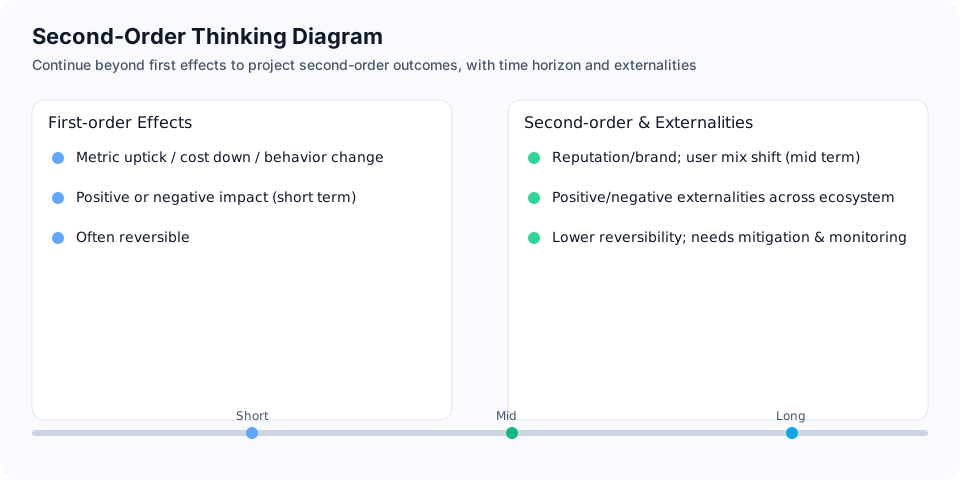
Second‑Order Thinking

Look beyond first effects to the second-order consequences and externalities for resilient long-term decisions.

Thinking ModelCognitive EfficiencyDecision MakingProblem Solving
Estimated time: 15 min
Difficulty: Beginner
Enhances Cognitive Efficiency
Second‑Order Thinking

Thinking Model Definition & Principles

Second‑order thinking asks you to move past immediate outcomes and simulate the second layer of effects, including positive/negative externalities. It is useful for product changes, policy shifts, investments, and operations to avoid short-term optimization that harms long-term outcomes.

  • First‑order: immediate and direct results
  • Second‑order: indirect or delayed consequences (incl. externalities)
  • Third‑order: longer‑horizon chain effects at a strategic level

Further reading: Externality (Wikipedia) · long‑term decisions

This thinking model can significantly enhance your cognitive efficiency and decision-making abilities, helping you solve complex problems more effectively. By applying this model, you can improve your time management efficiency and overall productivity.
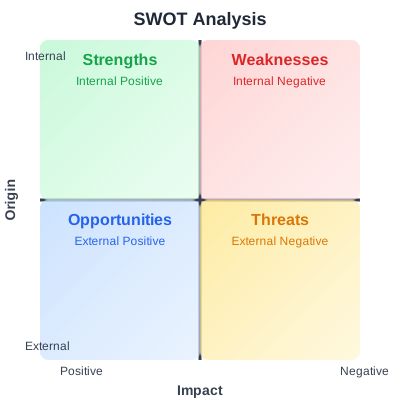
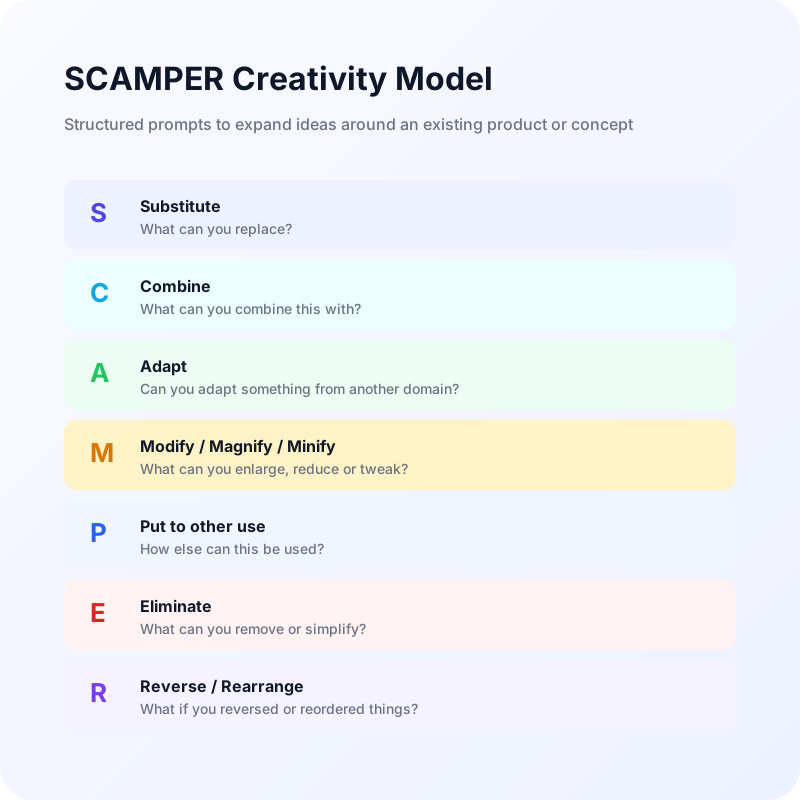
Comparison with Related Models

First vs Second vs Third

First: immediate. Second: indirect. Third: strategic and long‑range.

Primary focus

  • Time horizon
  • Externalities
  • Reversibility

vs First Principles

First Principles derives from fundamental truths; Second‑order simulates consequence chains over time.

Primary focus

  • Direction of reasoning
  • Validation & monitoring
  • Use cases

vs Inversion

Inversion asks how to fail/avoid; Second‑order asks what happens next. They combine well.

Primary focus

  • Failure checklist
  • Side‑effects spotting
  • Mitigations

vs 5‑Why

5‑Why traces root causes backward; Second‑order projects forward consequences.

Primary focus

  • Backward vs forward
  • Root vs effects
  • Combined workflow

How to Apply This Thinking Model

Below are the specific steps to apply this thinking model to enhance your cognitive efficiency and decision-making abilities. Following these steps can significantly improve your time management and problem-solving efficiency.

1

Define the goal/decision

Describe the goal or change to evaluate in one sentence.

Tips

  • State context/constraints
  • Choose evaluation horizon
2

List first‑order effects

Capture immediate impacts (positive/negative).

Tips

  • User/business/cost dimensions
3

Project second‑order effects

Ask what the first effects will cause next, incl. externalities.

Tips

  • Short/mid/long term
  • Positive/negative externalities
4

Weigh and act

Form a plan with metrics based on scope and reversibility.

Tips

  • Risks & mitigations
  • Owner & deadline

Frequently Asked Questions

Top questions for education and workplace adoption

It continues from first effects to second‑layer consequences to avoid short‑sighted or unintended results.

Use our online tool to practice this thinking model and enhance your cognitive efficiency and decision-making abilities. This interactive tool can help you better apply the model principles, improving your time management and problem-solving efficiency.

Need classroom handouts or template packs? Open the tool and use the export feature (PNG / PDF).

Online Practice Tool

Use this interactive tool to practice thinking model principles, enhancing cognitive efficiency and decision-making abilities.

Open Free Online Tool
Second‑Order Thinking – Thinking Model Guide | Zen of Thinking