Thinking Model Definition & Principles
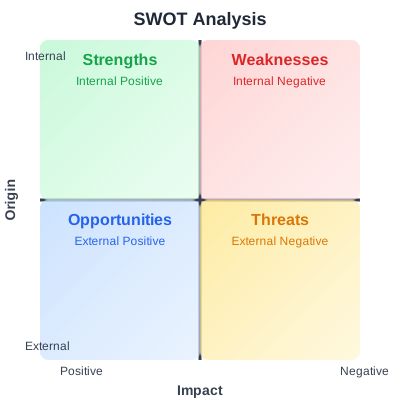
SWOT Analysis is a strategic planning tool developed by Albert Humphrey at Stanford University in the 1960s. SWOT stands for Strengths, Weaknesses, Opportunities, and Threats. The framework helps teams identify internal and external factors that shape success and guides more effective decisions.
Beyond business strategy, SWOT is also valuable for examining cognitive learning models, instructional design, and psychology interventions. By mapping theoretical assumptions to real-world constraints, educators can assess how well a model performs in practice.
The TOWS Matrix operationalizes SWOT insights by combining S/W with O/T to derive four strategy types — SO (Aggressive), WO (Adaptive), ST (Defensive), and WT (Survival). It turns analysis into actionable teaching or business initiatives.
This thinking model can significantly enhance your cognitive efficiency and decision-making abilities, helping you solve complex problems more effectively. By applying this model, you can improve your time management efficiency and overall productivity.