Socratic Questioning

Socratic questioning is a disciplined way of asking questions to clarify claims, surface assumptions and examine evidence, widely used in teaching, debates and self-reflection.

Thinking ModelCognitive EfficiencyDecision MakingProblem Solving
Estimated time: 25 min
Difficulty: Intermediate
Enhances Cognitive Efficiency

Thinking Model Definition & Principles

Socratic questioning focuses on using a structured sequence of questions to re-examine a claim or decision from multiple angles, instead of staying at the level of “I just feel this is true”.

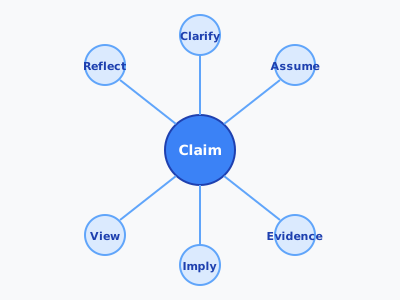
Typical dimensions include Clarification (what exactly do you mean), Assumptions (what must be true for this claim to hold), Evidence (what facts or data are you relying on), Viewpoints (who might see this differently), Implications (what follows if this is true), and Reflection (what might you have missed or need to revise).

This thinking model can significantly enhance your cognitive efficiency and decision-making abilities, helping you solve complex problems more effectively. By applying this model, you can improve your time management efficiency and overall productivity.
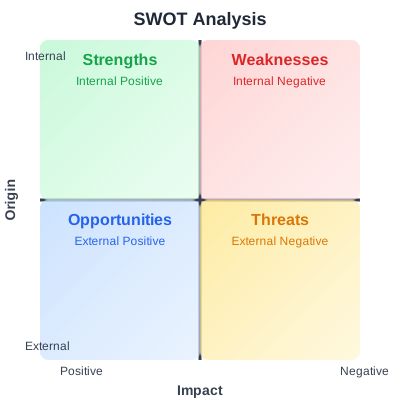
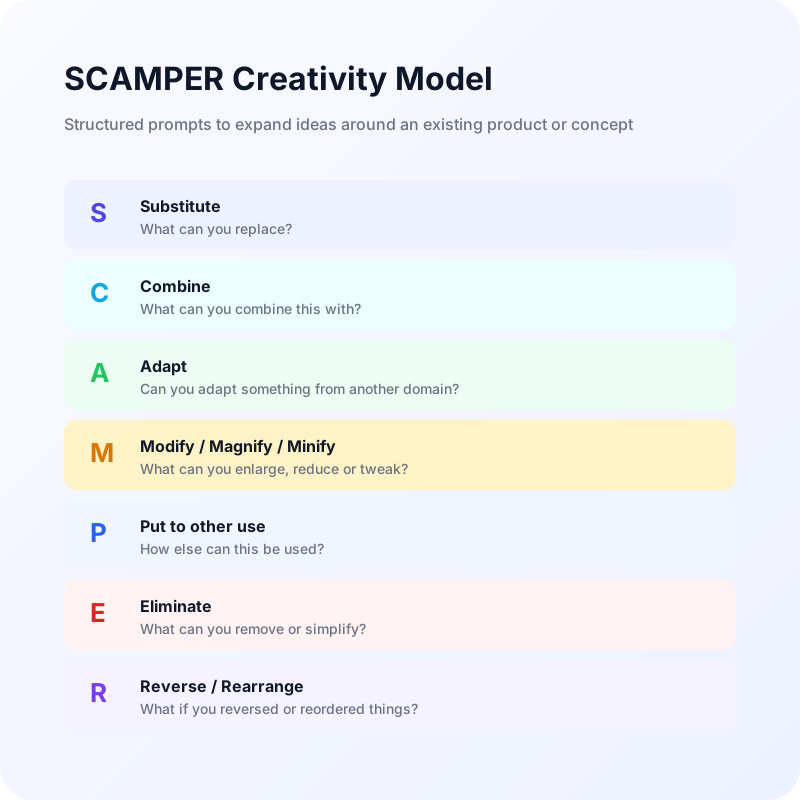
To see where this model sits in a full problem-solving flow and how it combines with other models and tools, visit theThinking Playbookspage for stage-based chains by scenario.

How to Apply This Thinking Model

Below are the specific steps to apply this thinking model to enhance your cognitive efficiency and decision-making abilities. Following these steps can significantly improve your time management and problem-solving efficiency.

1

Write down the claim or problem you want to examine

Capture the statement or question you want to think about, such as a news claim, a decision or a self-judgement.

Tips

  • Make it as concrete as possible
  • If it is an emotional judgement, start by writing the exact sentence you are telling yourself.
2

Start with clarification and evidence questions

First make sure you understand what is being claimed, then ask about the facts and data behind it before jumping into agreement or disagreement.

Tips

  • Prefer “What do you mean by…?” over immediate counter-arguments
  • Note down key facts and examples that are used to support the claim.
3

Probe hidden assumptions and alternative viewpoints

Ask what needs to be true for the conclusion to hold, and how people in different roles or contexts might see the issue differently.

Tips

  • Try asking from the perspective of different stakeholders
  • Ask “What if this assumption is false—how would that change the conclusion?”
4

Explore implications and refine your conclusion

Consider what short- and long-term consequences would follow if the claim were true, and how your view changes after the questioning process.

Tips

  • Write down your updated understanding and what you want to verify next
  • Separate parts that require more information from actions you can take now.

Thinking Model Application Cases

Below are practical application cases of this thinking model in real-world scenarios, demonstrating how it enhances cognitive efficiency, time management, and decision-making abilities. These cases can help you better understand how to apply this model to your own work and life.

Examining a news article or online claim

When you encounter a strong or emotional claim, use Socratic questioning to unpack it through clarification, evidence and assumptions.

Scenario

For example, with a statement like “This industry has no future”, you can ask what specific segment is meant, what data supports this, and whether there are clear counterexamples.

Outcome

By applying this model, problems can be effectively solved and expected results achieved.

Use our online tool to practice this thinking model and enhance your cognitive efficiency and decision-making abilities. This interactive tool can help you better apply the model principles, improving your time management and problem-solving efficiency.

Need classroom handouts or template packs? Open the tool and use the export feature (PNG / PDF).

Online Practice Tool

Use this interactive tool to practice thinking model principles, enhancing cognitive efficiency and decision-making abilities.

Open Free Online Tool
Socratic Questioning – Thinking Model Guide | Zen of Thinking